
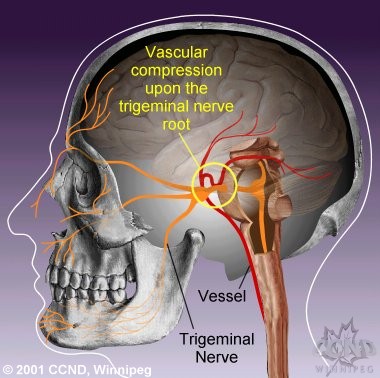
V. Trigeminal Nerves

www.umanitoba.ca/cranial_nerves/trigeminal_neuralgia/manuscript/images/tncomp.jpg
-3 Divisions: Ophthalmic (V1), Maxillary (V2) and Mandibular (V3)
-The main functions of the trigeminal nerves are sensing facial touch, pain and temperature and controlling muscles used for chewing.
1) Ophthalmic Divison (V1)
-leaves the neurocranium through the superior orbital fissure of the sphenoid bone
-travels to the forehead and eye
-Sensory neurons send sensory info from the following targets: anterior scalp, upper eyelid, nose, mucous membrane of nose, cornea and lacrimal (tear) gland.
2) Maxillary Divison (V2)
-leaves the neurocranium through the foramen rotundum of the sphenoid bone
-travels to the cheek
-Sensory neurons send sensory info from the following targets: mucous membrane of nose, palate, upper teeth, skin of cheek, upper lip and lower eyelid.
3) Mandibular Division (V3)
-leaves the neurocranium through the foramen ovale of the sphenoid bone
-travels to the lower face and jaw
-Sensory neurons send sensory info from the following targets: anterior tongue (excluding the taste buds), lower teeth, skin of chin, and temporal area of scalp.
-Motor neurons send info to the following targets: muscles of mastication, which are muscles involved in chewing.
Regions each division innervates:

www.umanitoba/ca/cranial_nerves/trigeminal_neuralgia/manuscript/images/tndistr.jpg


No comments:
Post a Comment